2020
3 channels audio, transducers, wood, rusted metal plates
Audiovisual documentation
A tautology is a needless repetition of an idea or an illusory definition that proposes in different terms the description of the object of observation. A t(autaut)ology, on the other hand, appears as a meaningless word. The word tautautology was coined by James Joyce in Finnegans Wake. As is the case with many of the words invented by Joyce, they seem to eschew a fixed and non-misunderstandable meaning. I have always been fascinated by the idea that Joyce tried to insert the latin expression aut-aut, in english either…or, into the word tautology, creating a sort of short-circuit that would contradict the word itself. An illusory definition, a repetition of an idea that would be able to define something else by defining itself. In this regard conceptual art has always been tautautological.
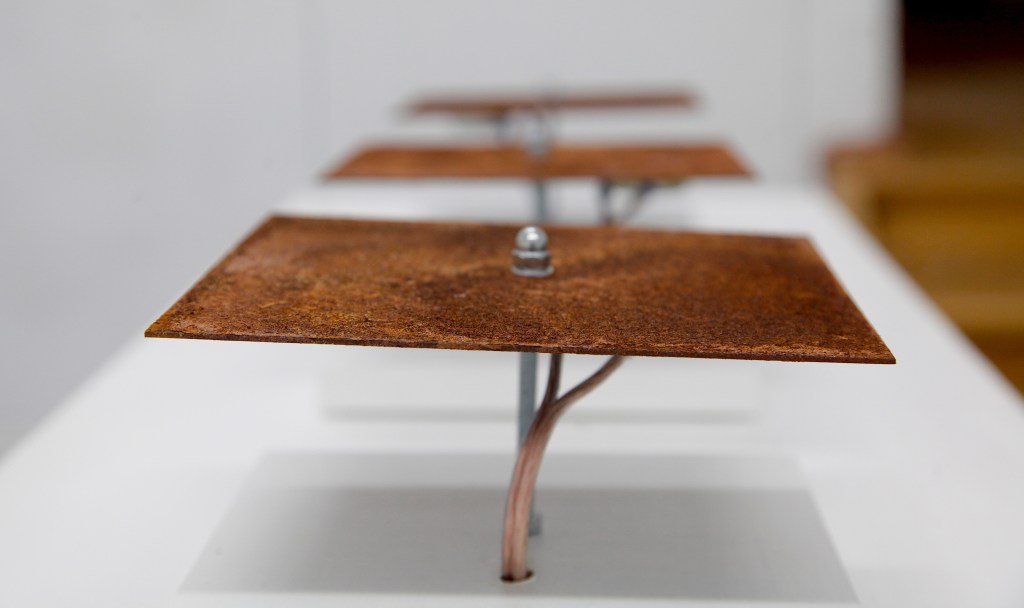
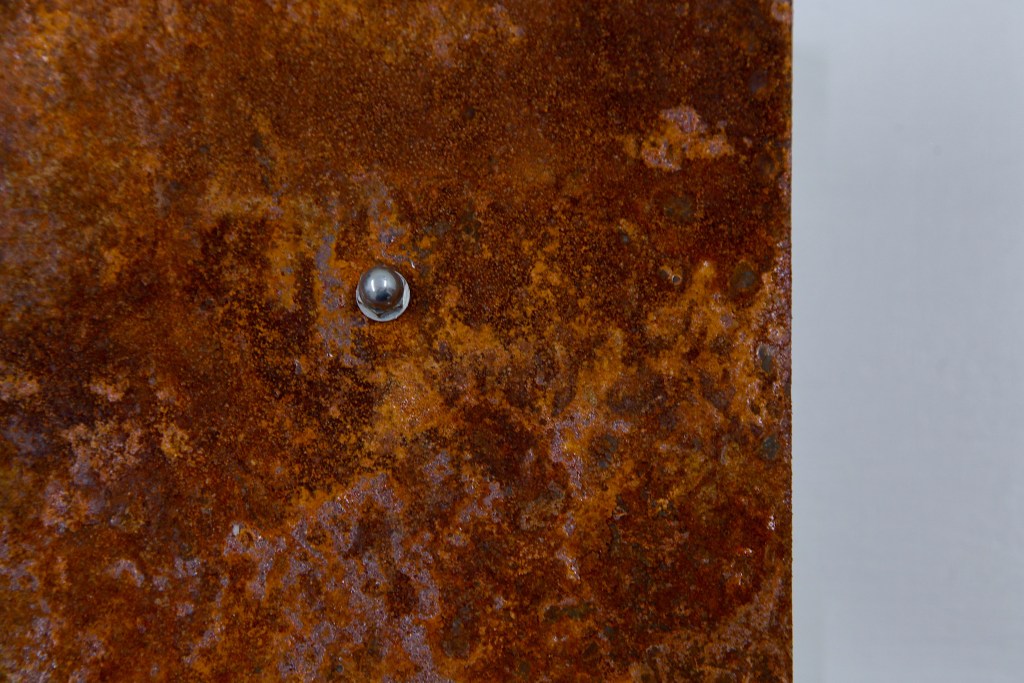
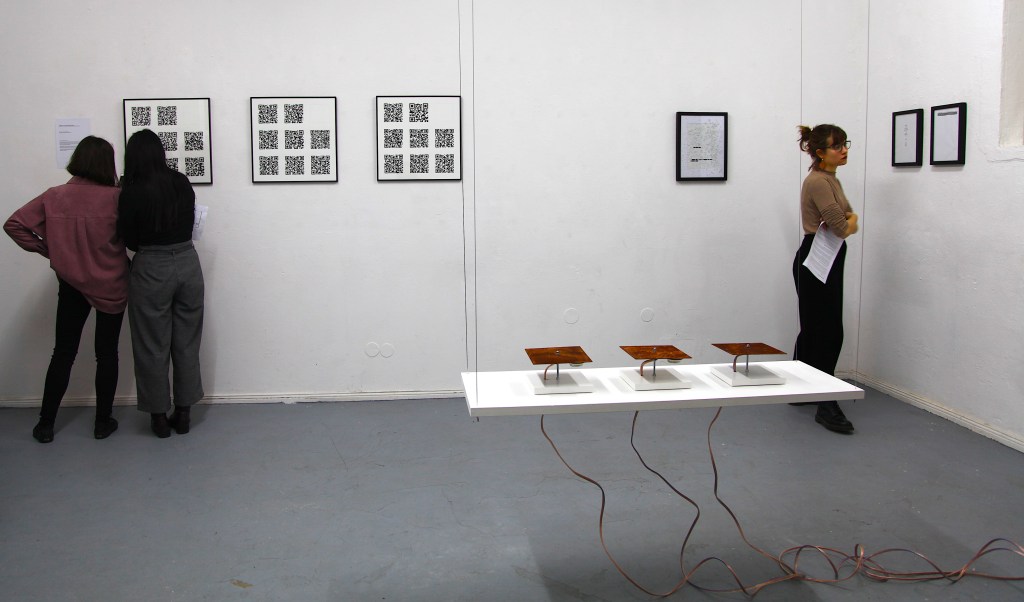
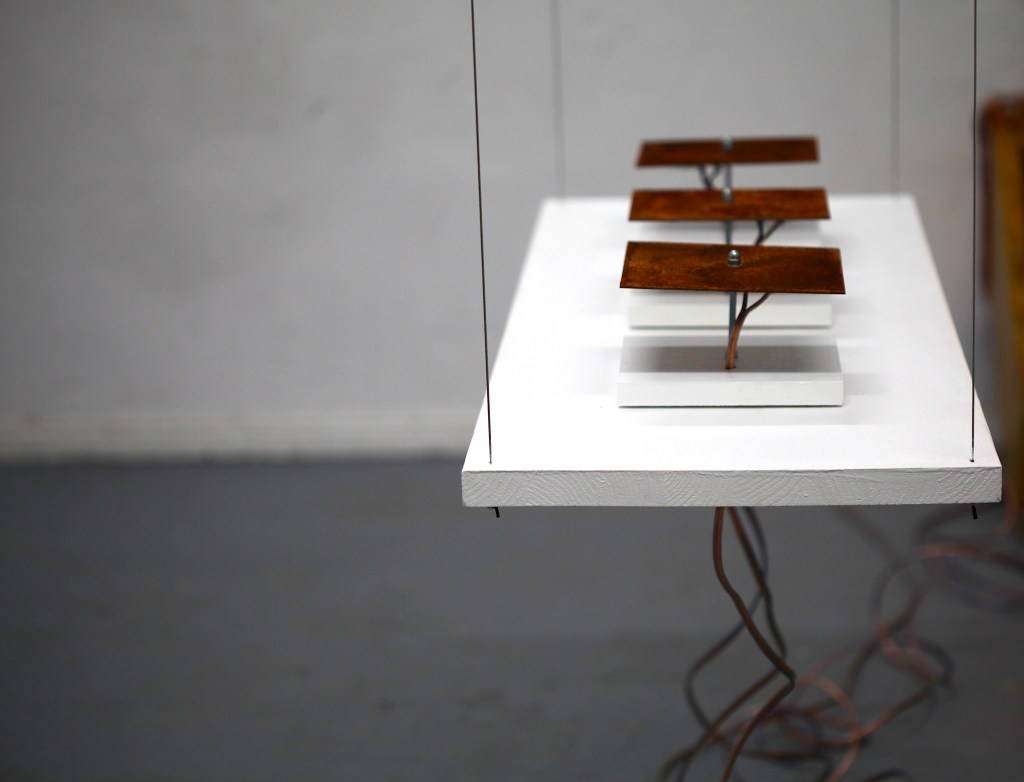
For three tautautologies about mnemosyne I have taken three Chladni plates, a device used in physics to visualize standing waves, and played them using bows, mallets, fingers, knuckles and nails. A 35 minute piece of these non-processed sounds that emphasizes a gestural approach on matter was composed. The iron plates were then sprayed with a solution of hydrogen peroxide, white vinegar and salt that created a thin patina of artificial rust. The piece is then played through the rusted plates using surface transducers. A tautautology.
It is often considered that traditional visual arts (painting and sculpture) don’t have the same temporal qualities that music or theater have. I have always considered it a very naive misunderstanding. The ideal white color of renaissance sculptures is a misunderstanding, pigment faded away and it needed time. Paintings develop in time as much as sound does, otherwise we would not need jobs such as restoration. The difference then is just one concerning rhythm.
 martin moolhuijsen