hand-painted 35mm to digital, 6:38, 24fps, 2K, color, sound
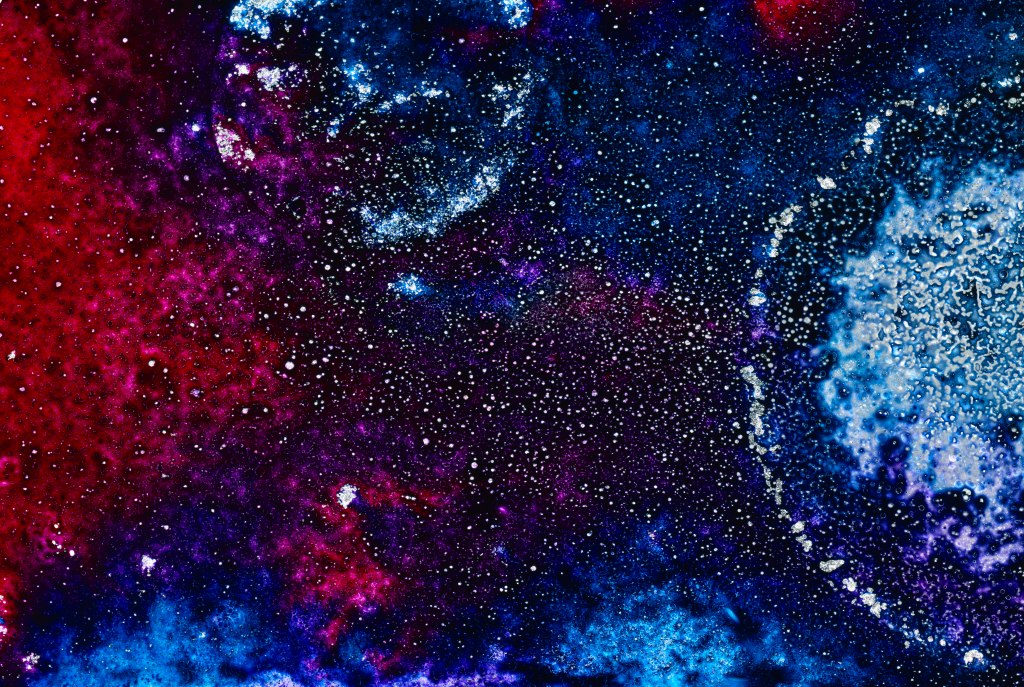
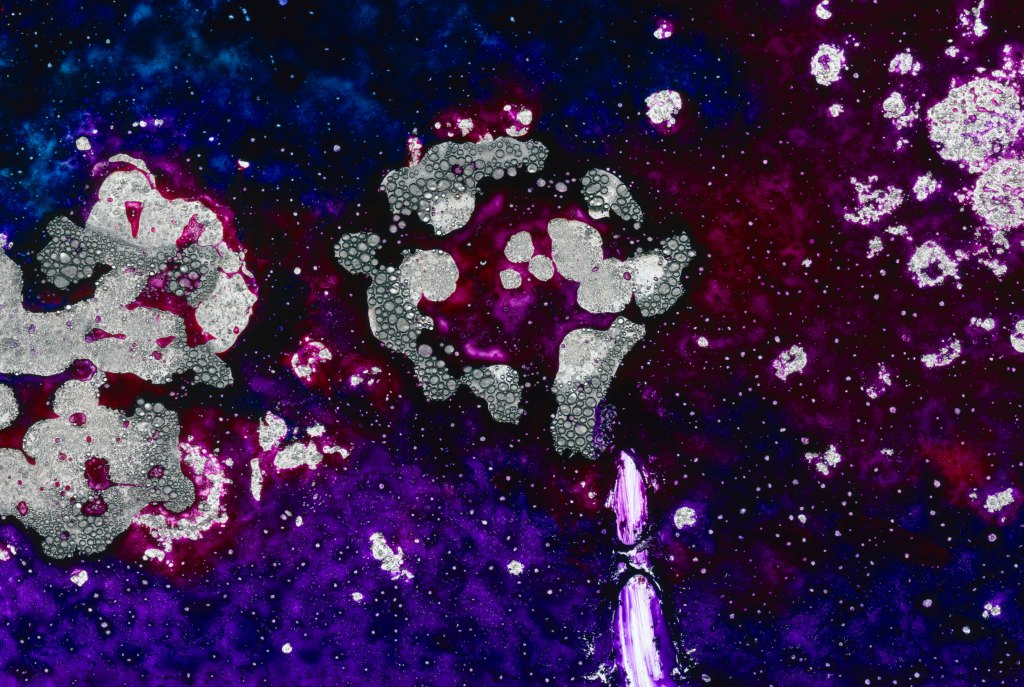

many grains make a cloud. many clouds form an atmosphere.
completely hand-painted on 35mm clear leader, the film was digitized as single photographs that were then fed into a self-developed editing software that allows real-time editing at frame level. a tool that combines thousands and thousands of still images in real time, without me ever knowing which image is going to appear next. a tool that makes all of my editing process a simple improvisation with light, color and rhythm.
what i am trying to do is to stop thinking film (or video, for that matter) linearly, that is on a timeline or filmstrip. ideally the images composing my film exist on a plane, as a series of thousands of points scattered in every direction. what my tool allows me to do is simply to jump from any point, to any other point, tracing a film in the process. this aspect puts me in a very unorthodox position regarding the conception of my images: each frame could come before or after any other frame. this deconstructs the traditional concept of animation, by which A follows B. in other words, each image is a completely independent and autonomous painting. the video was obtained with roughly 3000 hand-painted film frames, or 120 meters of clear leader.
this editing system is the first step towards an audiovisual instrument that i am currently building. this tool is inspired on one hand by the analog slide projector and on the other by granular synthesis, which features heavily on the soundtrack. the video editing follows the same pattern ruling granular synthesis tripartition in grain/cloud/atmosphere. in other words, both the functioning and the principles that control the musical instrument used to compose the soundtrack and the editing system used to ‘compose’ the film are the same. the visual material is organized according to the same principles: grain (single frame), cloud (frames with same color and painterly technique), atmosphere (frames with different color and/or painterly technique). more generally both film editing and granular synthesis are tools designed to generate continuity in discontinuity, that is, generate a ‘line’ out of simple discreet elements (points). with these ideas clear in mind two additional sound sources were chosen: sine waves and clocks ticking, a highly symbolic sound signifying discreetness in the continuous flow of time.
in the end, grain cloud atmosphere is first and foremost a film about the perception of time and space through the eye and the ear. In this case the two media associated with these senses seem to work in opposition rather than in harmony: the abstract hand-painted frames don’t play a part in the retention/protention mechanism that on the other hand characterizes so much of the temporal perception of sound, musical structures and gestures. in a sense, the images are always in the present while the soundtrack always points at the future.
 martin moolhuijsen