2024
Computer controlled slide projectors
16mm projectors
LED-Panel/Sculpture
4ch generative audio
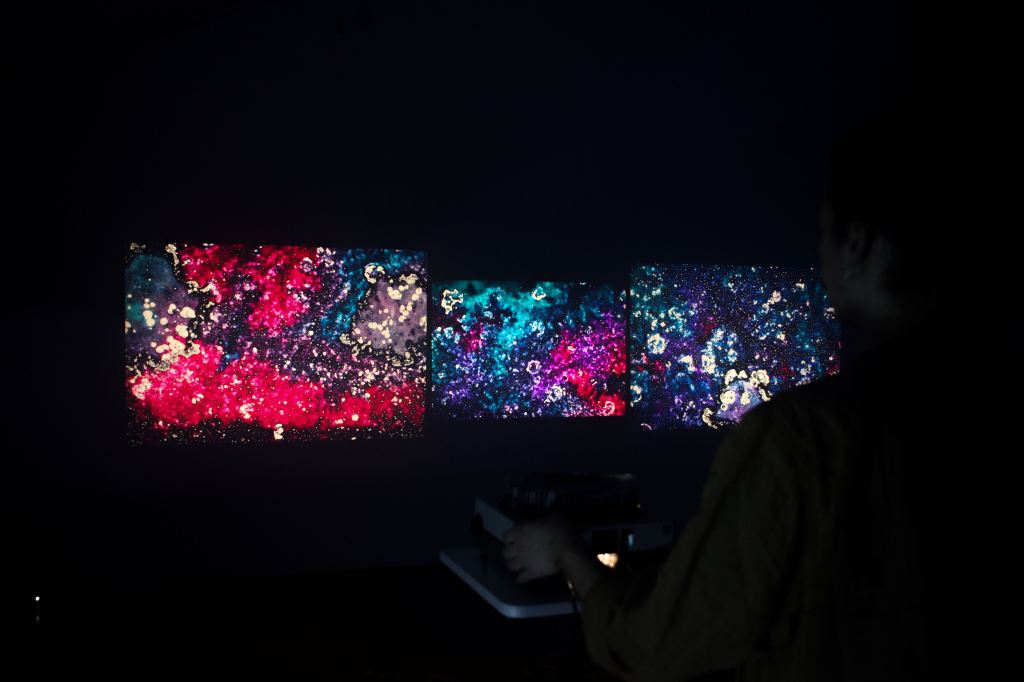

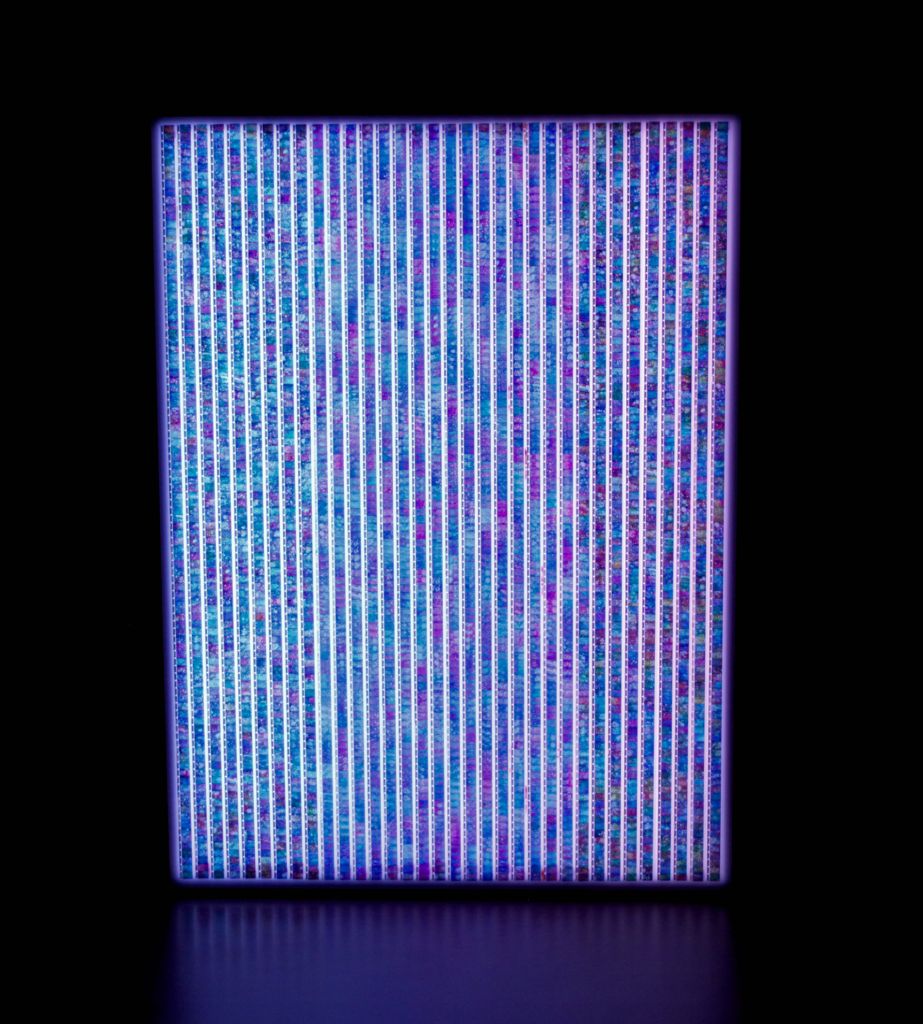
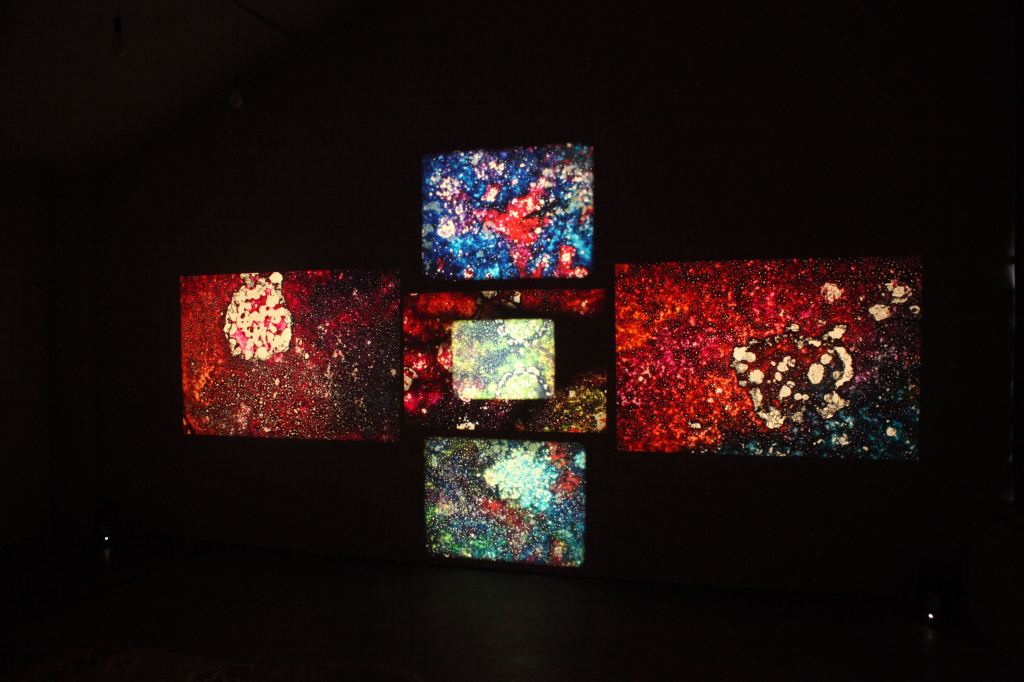
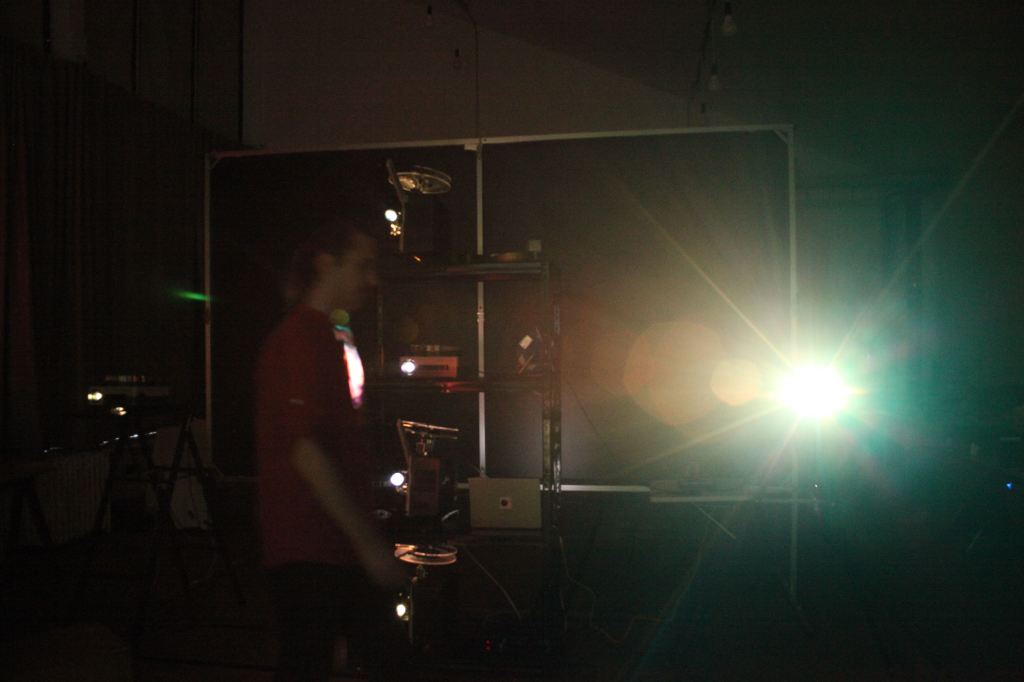
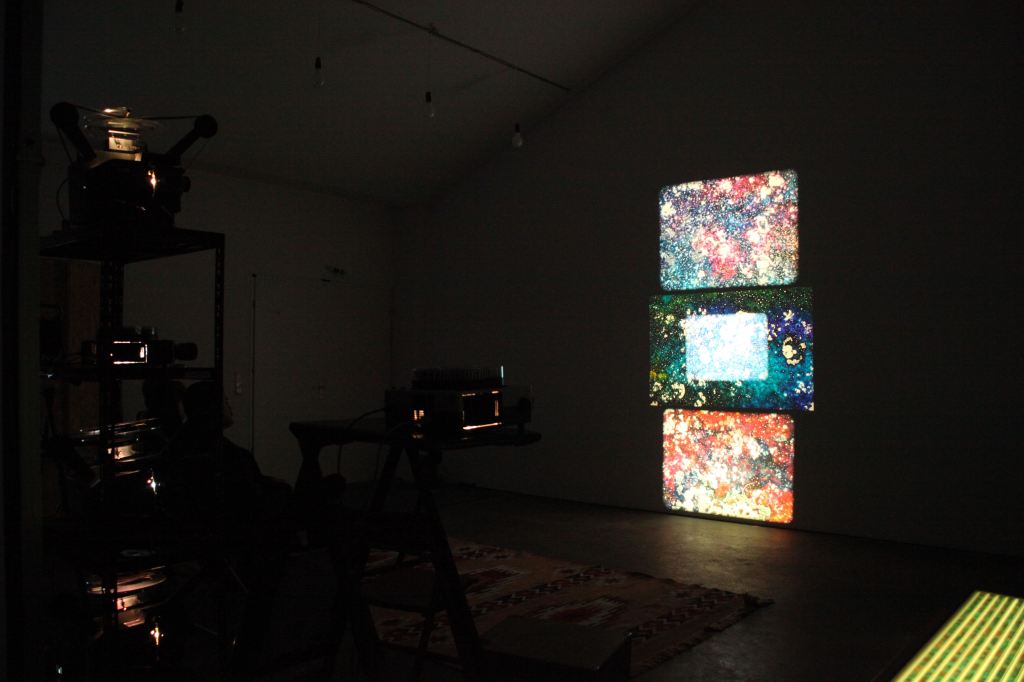
Forms of Motion is an installation combining computer controlled slide projectors, 16mm projectors, a light panel and a four channel sound installation, which are all inspired by a geometrical metaphor applied to film editing.
I consider a single frame of film to be as a point in time, an event detached from its surroundings. The filmstrip, on the other hand, is a line, a rapid succession of points that consistently follow each other. The three computer controlled slide projector contain my original points, the hand-painted frames, while the three 16mm projector contain copies of those points that are projected at different rhythms, from top to bottom: 24, 12 and 18. I work with the smallest units of the filmic grammar: filtered light and rhythm. The three different speeds show how the material perceptually changes as a function of time.
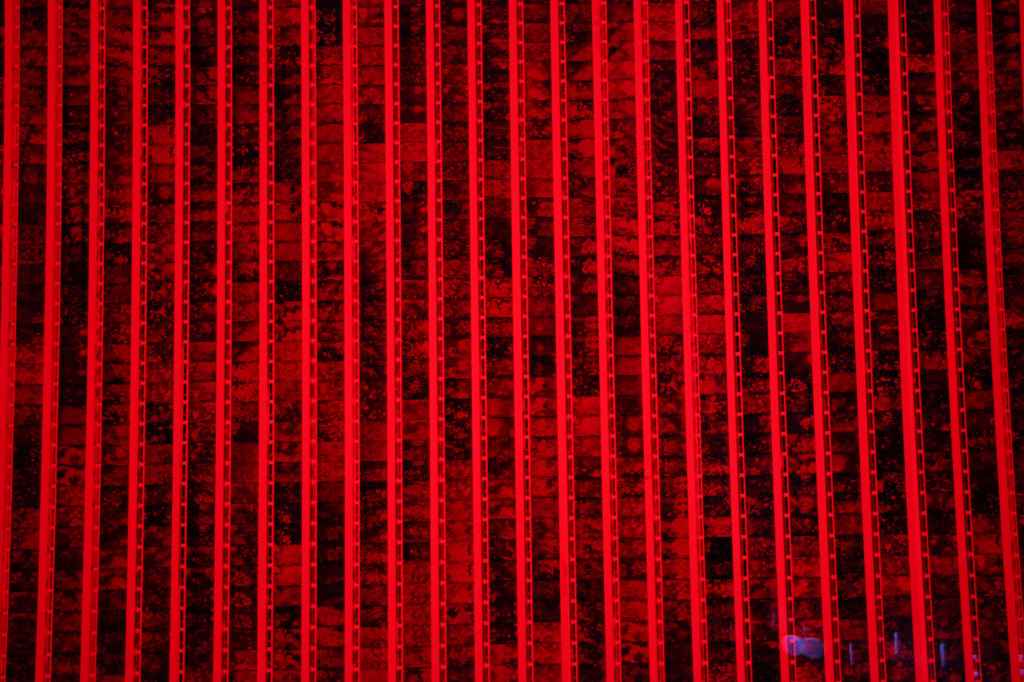
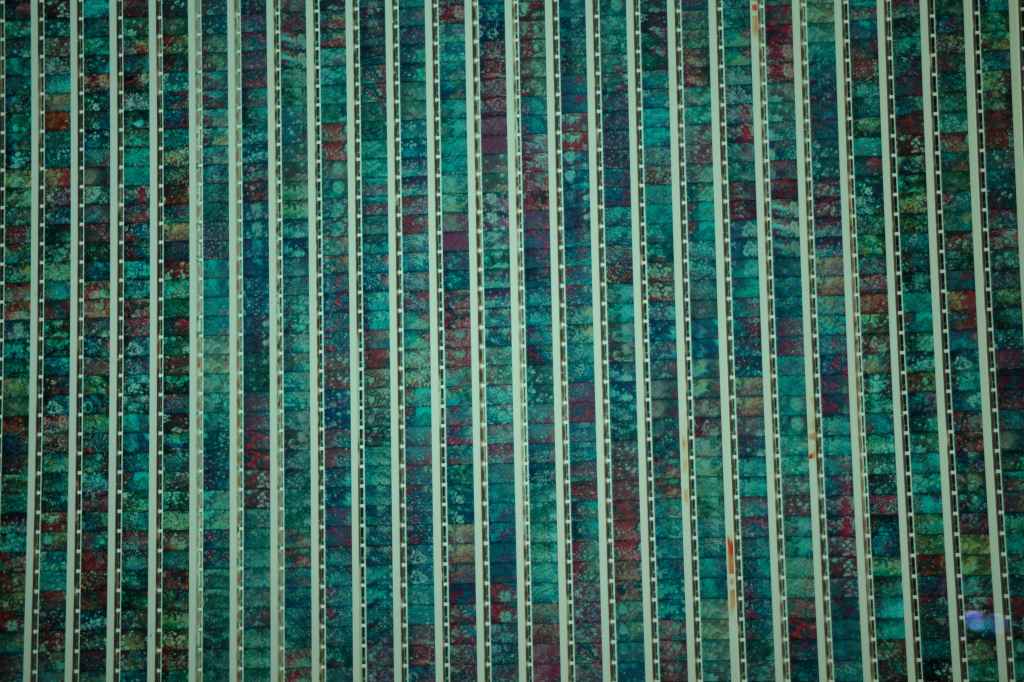
The light panel contains copies of the films projected on 16mm. The filmstrips are disposed horizontally next to each other, creating a plane. Temporality is taken out of the filmstrips and the films rest inert, leaving their nature as a succession of points in time and acquiring a new one as a disposition of points in space. The panel, build with a similar aspect ratio as a 16mm frame, becomes a metaphorical single frame that contains all of the images that you see projected by the rest of the installation. Ten simple and brief light animations (re)animate the inert filmstrips, imbuing again time in the panel. The plane (the panel) becomes again a point in time detached from its surroundings and this spatiotemporal cycle of continuously changing characteristics might or might not start again.
Every sound is projected in every direction as a sphere around its initial source, be that an acoustic source or a loudspeaker. The sound installation therefore deals with the third dimension of the geometrical space. The generative composition, built around the fundamental frequency of 50 Hz (the same of the alternating current that powers all of the analog and digital technologies of the installation), consists of a simple deconstructed FM synthesizer. FM synthesis is a non-linear synthesis technique, which means that you input two elements in the system and you get multiple elements at its output. For this sound installation I have directly synthesized its output with another synthesis technique, which allows me to independently control all of the different elements that are present at its output, spatializing them independently throughout the four loudspeakers. In this way a timbre (a perceptual unit) is deconstructed, spread in space and can be perceived as minimal elements (sine waves) that wander aimlessly in space, no longer pointing to their initial unity.
 martin moolhuijsen